Stainless Steel vs Granite vs Quartz Kitchen Sink: Which One Lasts Longer in an Indian Kitchen?
- Posted on
scoopit.seo
- Categories: Blog,Kohler in Hyderabad,Kohler Products in Hyderabad
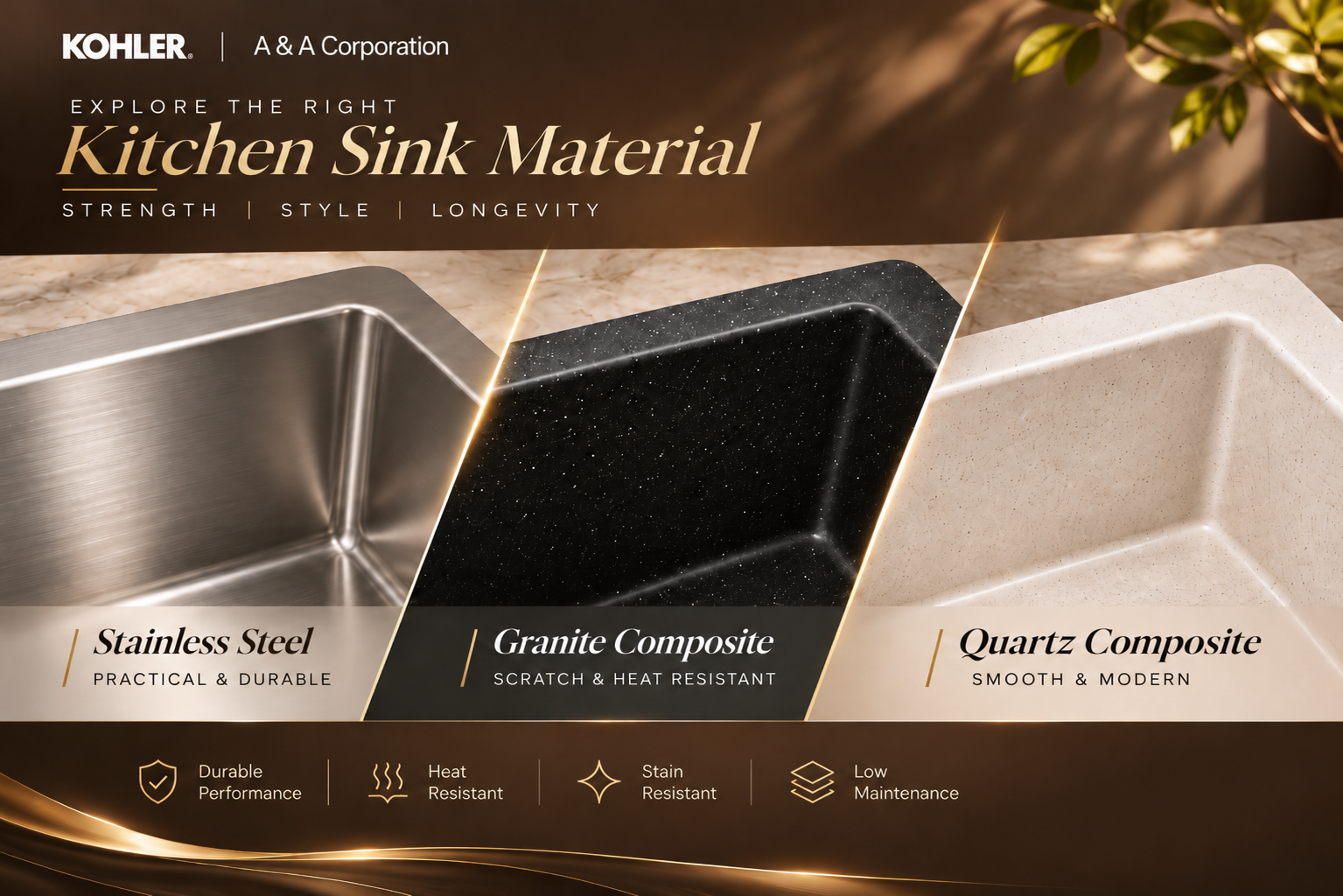
Indian kitchens put kitchen sinks through a lot more than everyday washing. From cleaning heavy kadais and pressure cookers to handling turmeric stains, oily utensils, hot vessels, and hard water, your sink faces constant use. And unlike smaller kitchen accessories, replacing a sink after installing the countertop is neither simple nor inexpensive.
This is why choosing the right stainless steel kitchen sink or exploring alternatives like granite and quartz deserves careful consideration. While stainless steel has been the traditional choice in Indian homes, composite materials are gaining popularity among homeowners designing modern modular kitchens.
So, which material offers better durability? Let’s compare stainless steel, granite composite, and quartz sinks based on everyday Indian cooking requirements, maintenance, appearance, and long-term value.
Quick Answer: Which Kitchen Sink Material Lasts Longest?
A good-quality stainless steel kitchen sink is the most forgiving all-rounder for everyday Indian cooking. Granite composite offers excellent scratch and heat resistance along with a premium appearance, while quartz composite provides a smooth, modern finish but requires attention to manufacturer-specific heat and maintenance guidelines.
Here’s a quick comparison:
| Material | Best At | Potential Drawback | Best Suited For |
|---|---|---|---|
| Stainless Steel | Handling heavy utensils, heat, and everyday use | Visible scratches and water spots | Busy Indian kitchens |
| Granite Composite | Scratch resistance, heat resistance, and premium appearance | Heavy installation and hard-water marks | Luxury modular kitchens |
| Quartz Composite | Smooth finish, colour options and stain resistance | Heat tolerance varies by manufacturer | Contemporary kitchens |
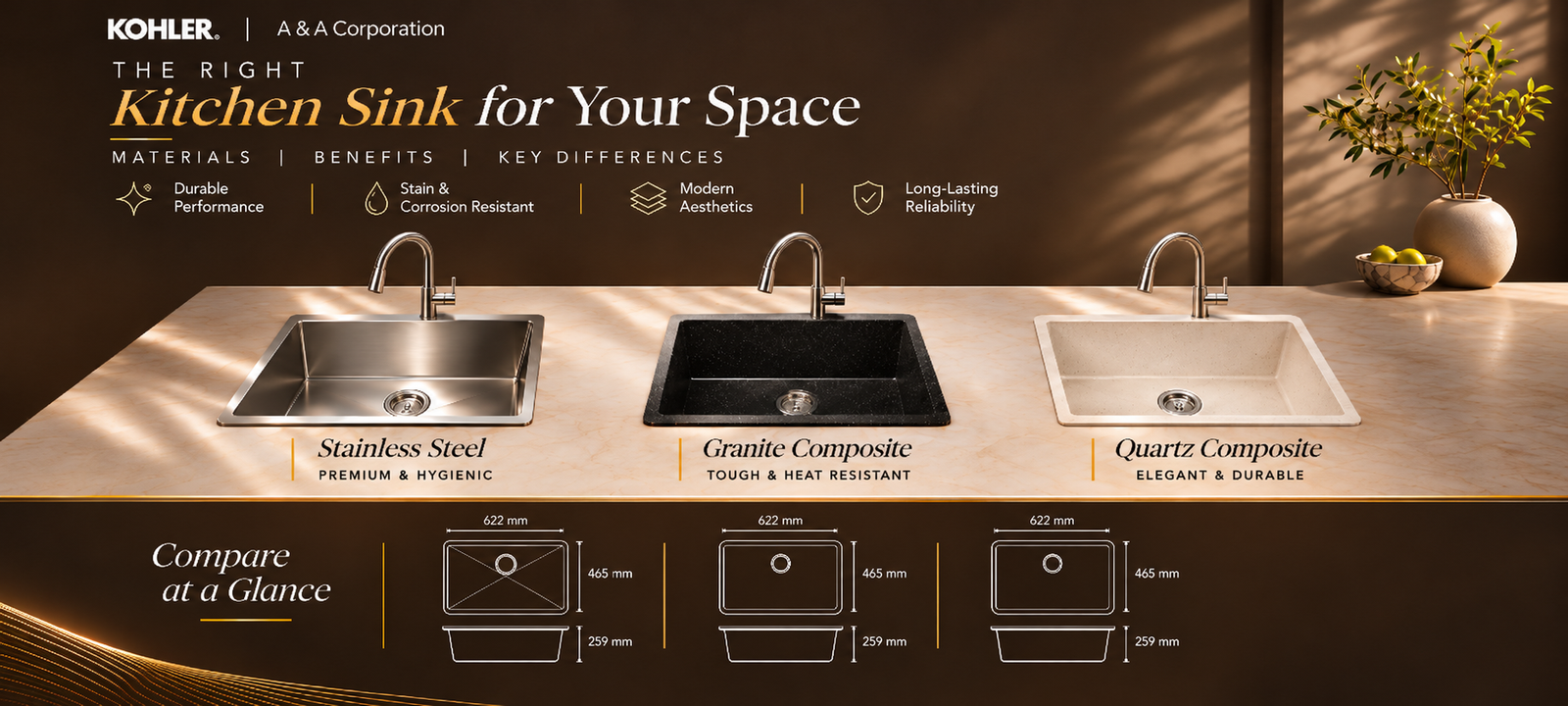
There isn’t one perfect material for every household. Your cooking habits, kitchen design, maintenance preferences and budget should determine your choice.
If you’re considering a kitchen upgrade, explore KOHLER kitchen sinks at A & A Corporation’s experience centres in Hyderabad.
Stainless Steel Kitchen Sink: Pros, Cons and Who Should Choose It
Stainless steel remains one of the most widely used kitchen sink materials in India. Its popularity comes from its practical design, affordability and ability to handle demanding everyday kitchen activities.
But not all stainless steel kitchen sinks offer the same performance. Material grade, thickness, finish, and construction quality make a difference.
What Makes a Good Stainless Steel Sink?
Before purchasing, consider these important factors.
1. Stainless Steel Grade
Grade 304 is a commonly preferred option for premium kitchen sinks. It offers good corrosion resistance and is suitable for regular kitchen use.
2. Steel Thickness
Thickness is often measured in gauge. A lower gauge number generally indicates thicker steel. Thicker sinks tend to feel sturdier and are less prone to dents.
3. Sound-Dampening Pads
Quality sinks often feature sound-absorbing pads or coatings underneath the bowl. These help reduce the noise created by running water and utensils.
4. Surface Finish
Brushed and satin finishes are practical choices because they tend to conceal everyday scratches better than highly polished mirror finishes.
Advantages of Stainless Steel Kitchen Sinks
- Handles heavy utensils such as pressure cookers and kadais.
- Offers good resistance to everyday heat exposure.
- Easy to maintain with mild soap and water.
- Does not chip easily under ordinary utensil contact.
- Available across different sizes and price ranges.
Disadvantages of Stainless Steel Sinks
- Fine scratches develop with regular use.
- Hard water can leave visible mineral spots.
- Thin models may produce more noise while washing utensils.
- The metallic appearance might not suit every modern kitchen design.
Why Consider KOHLER Strive?
KOHLER’s Strive stainless steel range is designed for homeowners who prefer the practicality of steel while looking for a premium kitchen sink.
If you’re considering this collection, ask A & A Corporation about the available Strive models, sizes, and configurations before finalizing your kitchen design.
Granite Kitchen Sink: Pros and Cons of Granite Composite
A granite kitchen sink is a popular choice for homeowners who want something beyond the traditional metallic finish.
One important detail: granite composite sinks are not carved from solid granite blocks. They’re manufactured using crushed granite particles combined with resin to create a dense and durable material.
KOHLER’s Neoroc material is an example of granite composite technology.
What Makes KOHLER Neoroc Different?
KOHLER’s Neoroc granite composite is designed to combine durability with a refined matte appearance.
According to KOHLER’s published product information, Neoroc is rated to withstand temperatures up to 750°F (approximately 400°C) and offers resistance to chips, scratches, and stains.
KOHLER’s Cairn collection, made using Neoroc, was its first kitchen sink launch in India.
Advantages of Granite Composite Sinks
1. Excellent Scratch Resistance
Granite composite offers a durable surface for everyday kitchen activity.
2. Heat Resistance
Neoroc’s published heat rating makes the material an attractive option for homeowners who regularly handle hot cookware. Follow the manufacturer’s instructions before placing hot vessels directly inside the sink.
3. Premium Matte Appearance
Unlike conventional steel, granite composite offers a sophisticated matte finish that complements modern modular kitchens.
4. Colour Options
Granite composite sinks are available in different colours, including black, depending on the collection.
5. Quieter Washing Experience
The dense composite construction helps reduce the sound of water and utensils compared with many conventional steel sinks.
Disadvantages of Granite Composite Sinks
- Heavier than stainless steel and requires appropriate cabinet support.
- Dark colours may show white hard-water deposits.
- Generally costs more than standard stainless steel sinks.
- Heavy impacts can still cause damage.
Why Choose a Black Kitchen Sink?
A black kitchen sink creates a striking contrast against light countertops, white cabinetry and wooden finishes.
It works particularly well in contemporary and luxury kitchens.
However, black surfaces require regular attention in areas with hard water. Mineral deposits can appear as white marks when water dries on the surface.
Wiping the sink dry after use helps maintain its appearance.
If you’re looking for a premium granite composite sink, explore KOHLER’s kitchen sink collection at A & A Corporation.
Quartz Kitchen Sink: Pros and Cons
A quartz kitchen sink is another popular option in contemporary kitchen design.
Like granite composite, quartz sinks are manufactured using mineral particles combined with resin. The exact composition varies between manufacturers.
Advantages of Quartz Kitchen Sinks
1. Smooth Surface
Quartz composite offers a refined surface that complements modern countertops and modular kitchen designs.
2. Colour Variety
Quartz sinks are available in different shades, making them suitable for homeowners who want to coordinate their sink with their kitchen interiors.
3. Good Stain Resistance
Quality quartz composite sinks offer good resistance to everyday stains when cleaned promptly.
4. Reduced Washing Noise
The composite construction helps absorb sound, providing a quieter washing experience than many steel sinks.
Disadvantages of Quartz Sinks
- Heat tolerance varies depending on the manufacturer’s formulation.
- Lighter colours can develop visible turmeric stains if spills are left unattended.
- Harsh cleaning products can affect certain finishes.
- Quality and durability vary significantly between brands.
Quartz vs Granite: Which Is Better?
The difference between quartz and granite composite sinks depends heavily on the manufacturer’s material formulation and product specifications.
Neither material should automatically be considered superior based on its name alone.
Before purchasing, compare the published heat ratings, scratch resistance, stain resistance, warranty, and cleaning recommendations.
Fireclay and Ceramic Kitchen Sinks: Are They Worth Considering?
Beyond stainless steel, granite and quartz, homeowners also explore fireclay and ceramic kitchen sinks.
These materials are known for their distinctive appearance and traditional styling.
Fireclay Kitchen Sinks
Fireclay is manufactured by shaping clay and firing it at high temperatures before applying a glazed finish.
Advantages of Fireclay Sinks
- Classic glossy appearance.
- Smooth glazed surface.
- Good resistance to everyday staining.
Disadvantages of Fireclay Sinks
- Can chip if heavy kadais or cast-iron utensils are dropped.
- Relatively heavy construction.
- Often comes at a premium price.
Fireclay sinks are particularly suited to farmhouse-style kitchens and design-focused interiors.
Ceramic Kitchen Sinks
Ceramic sinks offer a smooth, glazed surface and a traditional appearance.
They’re relatively easy to clean but require careful handling because heavy impacts can cause chips or cracks.
For households that regularly handle heavy Indian cookware, stainless steel or quality granite composite is generally a more practical option.
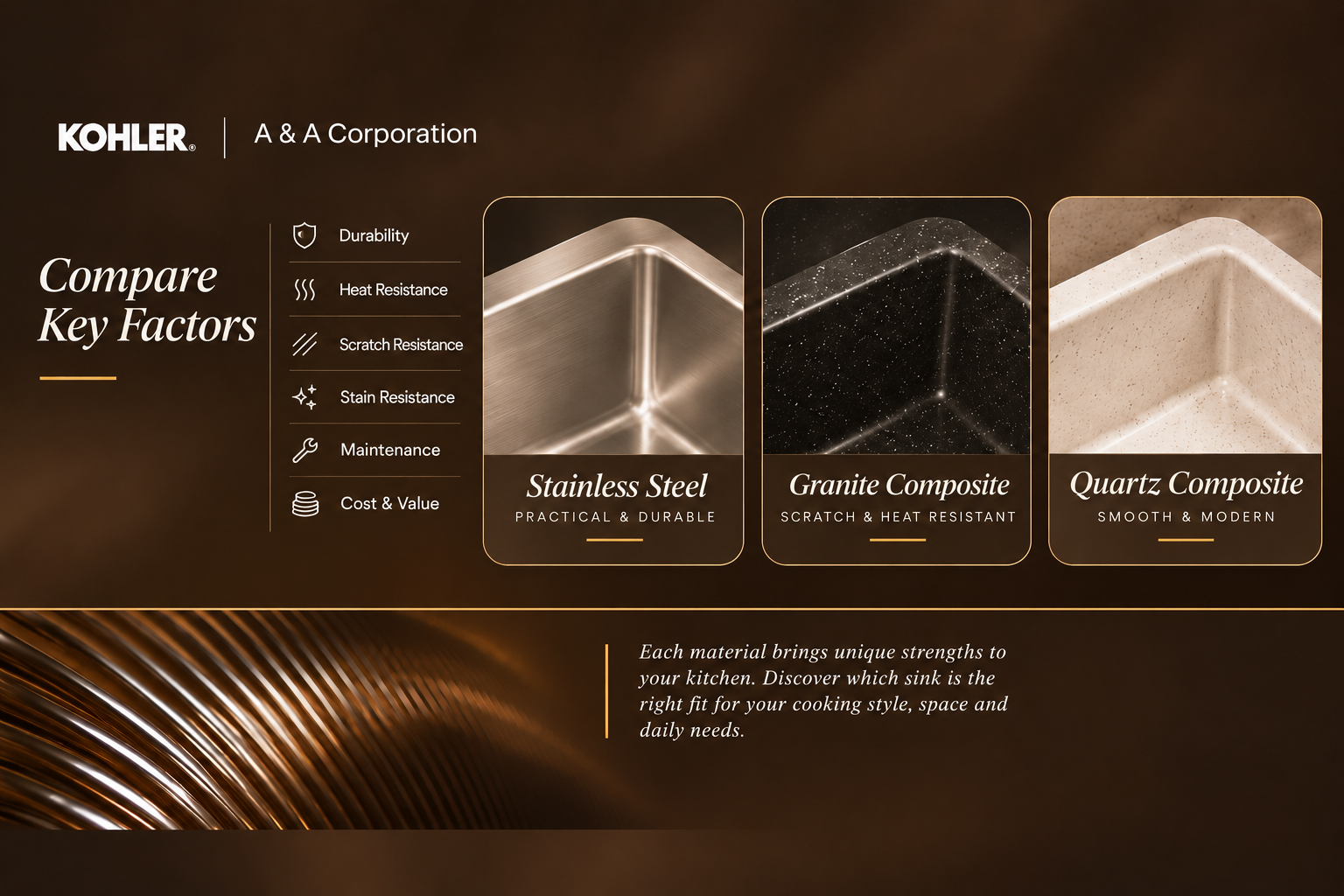
The Indian Kitchen Test: How Do These Materials Handle Everyday Challenges?
A kitchen sink needs to perform well under real household conditions. A beautiful finish alone doesn’t guarantee long-term satisfaction.
Here is what homeowners should consider when comparing different sink materials.
1. Turmeric and Masala Stains
Turmeric is one of the most common staining concerns in Indian kitchens.
- Stainless steel: Generally easy to clean when stains are addressed promptly.
- Granite composite: Offers good stain resistance, although cleaning recommendations vary by finish.
- Quartz composite: Quality products offer good stain resistance, but lighter shades require prompt cleaning.
2. Scratches from Heavy Utensils
Regular contact with steel vessels, kadais, and scrubbers creates surface wear.
- Stainless steel: Fine scratches are expected with regular use.
- Granite composite: Generally offers better scratch resistance.
- Quartz composite: Scratch resistance depends on the material formulation and manufacturer.
3. Heat from Hot Cookware
Hot pressure cookers and kadais are common in Indian cooking.
- Stainless steel: Handles everyday hot cookware well.
- Granite composite: KOHLER rates its Neoroc material for temperatures up to 750°F.
- Quartz composite: Follow the manufacturer’s specific temperature guidelines.
4. Hard Water Deposits
Hard water is a concern in several Hyderabad households, particularly where borewell water is used.
- Stainless steel: Water spots can appear when droplets dry.
- Granite composite: Dark finishes can show white mineral deposits.
- Quartz composite: Mineral deposits may be visible depending on the colour and finish.
5. Accidental Impact
Heavy utensils sometimes slip during washing.
- Stainless steel: More forgiving of everyday impacts, although dents are possible.
- Granite composite: Resistant to everyday wear, but heavy impacts can cause chips.
- Quartz composite: Impact resistance varies by construction and product quality.
These are material-based expectations, not results of physical showroom testing. Always refer to the manufacturer’s specifications for the exact product you’re considering.
How to Maintain Each Kitchen Sink Material
Even a premium sink needs regular care to maintain its appearance.
| Material | Daily Care | Weekly Care | Avoid |
|---|---|---|---|
| Stainless Steel | Rinse and wipe dry | Clean along the grain | Steel wool and bleach |
| Granite Composite | Mild soap and water | Clean mineral deposits using approved products | Harsh abrasives |
| Quartz Composite | Rinse stains promptly | Use a non-abrasive cleaner | Unapproved hot cookware and harsh chemicals |
Additional Care Tips for Hyderabad Homes
If your home receives hard borewell water, make a habit of wiping your sink dry at night.
This simple routine helps reduce white mineral deposits, particularly on dark granite composite surfaces.
Always check the cleaning instructions provided by the manufacturer before using vinegar or other cleaning solutions.
Which Kitchen Sink Should You Choose? A Quick Buyer’s Checklist
Before purchasing a kitchen sink, consider these factors.
1. Your Cooking Style
If you cook multiple meals daily and frequently handle heavy utensils, stainless steel and granite composite are practical choices.
2. Your Kitchen Design
Prefer a metallic, versatile appearance? Choose stainless steel.
Want a matte, premium finish? Explore granite composite.
Looking for a specific colour or smooth contemporary finish? Compare quartz composite options.
3. Installation Type
Kitchen sinks are available in different installation configurations.
- Undermount: Installed below the countertop for a seamless appearance.
- Top-mount: The sink sits above the countertop and is generally simpler to install.
- Flush-mount: Designed to align with the countertop surface.
Choose an installation type compatible with your countertop material and cabinet design.
4. Bowl Configuration
Consider how you use your sink.
- Single bowl: Suitable for washing large utensils.
- Double bowl: Allows separate washing and rinsing.
- Bowl with drainboard: Offers additional space for drying utensils.
5. Budget and Long-Term Value
Stainless steel generally offers the best entry-level value.
Granite and quartz composite sinks require a higher initial investment but offer different aesthetic and performance benefits.
6. Pair Your Sink with the Right Faucet
A well-matched faucet improves both functionality and the overall kitchen appearance.
Pull-down faucets are particularly useful with large or deep sink bowls because their flexible spray heads make washing vegetables, utensils, and larger vessels easier.
Explore the KOHLER Kitchen Sink Collection to compare available sink styles and configurations.
You can also read our Kohler Kitchen Faucet Upgrade Guide for more information.
Conclusion
A good-quality stainless steel kitchen sink is the safest all-rounder for demanding Indian kitchens, while granite composite is an excellent premium upgrade for homeowners prioritizing scratch resistance and modern aesthetics. The right choice ultimately depends on your cooking habits, kitchen design, and maintenance preferences.
Visit A & A Corporation, KOHLER’s Exclusive Channel Partner in Hyderabad, at its Banjara Hills or Secunderabad experience centres to explore KOHLER kitchen sinks and matching faucets. Speak with the team to find the right sink for your kitchen.
Call +91 91333 88349 for assistance.
For the latest KOHLER kitchen and bathroom inspiration, new arrivals and experience centre updates, follow A & A Corporation on Instagram.
Frequently Asked Questions
Which is better for an Indian kitchen: stainless steel, granite, or quartz sink?
Stainless steel is a practical all-rounder for heavy Indian cooking. Granite composite offers excellent scratch and heat resistance, while quartz composite suits homeowners who prefer a smooth, contemporary finish.
Does a granite kitchen sink stain with turmeric?
Quality granite composite sinks offer good stain resistance. However, turmeric and masala spills should be cleaned promptly to prevent discolouration, following the manufacturer’s care instructions.
Is a quartz sink better than a granite sink?
Neither is universally better. Both offer premium finishes and good everyday performance. Compare the manufacturer’s specifications for heat resistance, scratch resistance, stain protection, and maintenance before deciding.
Do black kitchen sinks show water spots?
Yes. Black kitchen sinks, particularly granite composite models, can show white mineral deposits when hard water dries on the surface. Regular rinsing and wiping help maintain their appearance.
Which stainless steel grade is best for a kitchen sink?
Grade 304 stainless steel is a commonly preferred option for premium kitchen sinks because of its good corrosion resistance and suitability for regular kitchen use.
Can I put a hot pressure cooker in a granite composite sink?
KOHLER rates its Neoroc granite composite material for temperatures up to 750°F (approximately 400°C). Still, follow the specific product’s care instructions before placing hot cookware directly inside the sink.